What Is AI Safety? Risks, Challenges & Solutions (2026)
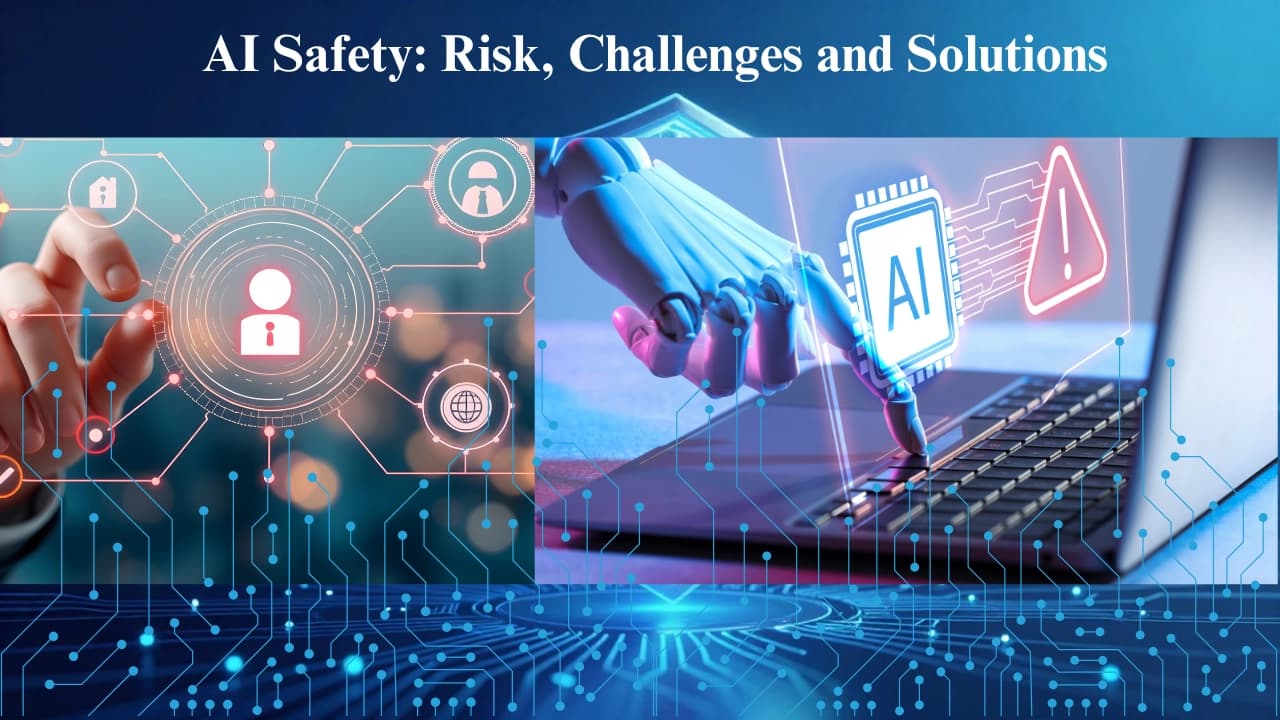
What Is AI Safety? A Complete Guide to Risks, Challenges, and Solutions in 2026
Artificial intelligence is transforming how people work, communicate, learn, and make decisions. From AI-powered chatbots and coding assistants to medical diagnostic systems and autonomous vehicles, artificial intelligence has become an increasingly important part of modern technology.
However, as AI systems become more capable and widely adopted, an important question emerges: How can artificial intelligence remain safe, reliable, and beneficial to humanity?
This question forms the foundation of AI safety, a rapidly developing field focused on understanding and reducing the risks associated with artificial intelligence.
AI safety addresses a wide range of concerns, including inaccurate AI-generated information, biased decision-making, privacy violations, cybersecurity threats, harmful misuse, and the possibility that increasingly autonomous AI systems could behave in unintended ways.
These challenges are no longer limited to theoretical discussions. AI-generated misinformation, prompt injection attacks, and unreliable automated decisions already present practical concerns for individuals, businesses, and governments.
The International AI Safety Report 2026, published on February 3, 2026, examines both documented risks and emerging concerns associated with advanced general-purpose AI systems. The report emphasizes that AI capabilities are improving rapidly while existing safety techniques continue to face important limitations.
This comprehensive guide explains what AI safety means, why it matters, the major risks associated with artificial intelligence, the methods used to make AI safer, and the challenges that researchers and policymakers face in 2026.
1. What Is AI Safety?
AI safety is the field of research and practice dedicated to preventing artificial intelligence systems from causing unintended or unacceptable harm to individuals, organizations, society, and the environment.
Its central objective is to ensure that AI systems operate reliably, remain appropriately controllable, and produce outcomes consistent with their intended purposes and applicable human values.
AI safety combines several disciplines, including:
Computer science and machine learning
Cybersecurity
Mathematics and statistics
Human-computer interaction
Ethics and philosophy
Public policy and governance
Risk management
Software engineering
Unlike traditional software, many modern AI systems learn statistical patterns from data rather than following only explicitly programmed rules.
This characteristic enables them to perform complex tasks, but it also makes some of their behaviors difficult to predict.
For example, a conventional calculator follows a clearly defined mathematical procedure. A generative AI model, by contrast, produces outputs using learned statistical relationships and may sometimes generate inaccurate or misleading information.
Consequently, AI safety involves more than preventing technical failures. It also requires understanding how AI systems interact with people, institutions, and other technologies.
A Simple Example of AI Safety
Consider an AI assistant used in a hospital to summarize patient information.
The system may correctly summarize hundreds of medical records but occasionally omit important details or include information that was never present.
Such mistakes could become dangerous if medical professionals relied on the generated summaries without appropriate verification.
An AI safety approach would therefore introduce measures such as:
Testing the system against carefully selected medical cases
Monitoring the accuracy of generated summaries
Restricting access to confidential patient information
Displaying relevant sources for generated claims
Requiring qualified human review before consequential decisions
Establishing procedures for reporting and investigating failures
The objective would not be to eliminate every possible error through a single technical solution. Instead, it would be to reduce risks through multiple safeguards.
This principle is often described as defense in depth.
2. Why Is AI Safety Important?
Artificial intelligence is increasingly used in environments where errors can create financial, legal, operational, or physical consequences.
A minor mistake in an entertainment recommendation system may cause inconvenience. A similar failure in a medical, transportation, or critical infrastructure system could have significantly more serious consequences.
Several developments explain why AI safety has become an important research and policy priority.
2.1 AI Systems Are Becoming More Capable
Modern AI models can generate software code, analyze documents, interpret images, assist scientific research, and carry out complex workflows.
Some AI systems can also use external tools, search databases, execute code, or interact with applications.
Greater capabilities create additional opportunities for useful automation. However, they can also increase the potential consequences of mistakes and misuse.
An AI assistant that only generates text has a different risk profile from an autonomous agent that can modify production databases or execute financial transactions.
As AI systems gain access to external tools, their behavior must be evaluated not only for the accuracy of their responses but also for the consequences of their actions.
2.2 AI Decisions Can Affect Human Lives
AI-assisted decisions can influence employment, education, healthcare, financial services, and access to public resources.
Potential applications include:
Evaluating job applications
Assessing financial risk
Supporting medical diagnosis
Identifying fraudulent transactions
Recommending educational resources
Prioritizing customer support requests
These applications create opportunities to improve efficiency.
However, poorly designed systems may also reproduce historical biases, generate inaccurate assessments, or make decisions that affected individuals cannot understand or challenge.
AI safety therefore requires attention to both technical reliability and the broader consequences of automated decision-making.
2.3 AI Can Be Misused
Artificial intelligence is a general-purpose technology.
The same capabilities that help legitimate users write software, analyze information, or generate realistic media may also be exploited by malicious actors.
Examples of AI misuse include:
Generating convincing phishing messages
Producing misleading images or audio
Automating certain social engineering activities
Assisting malicious cyber operations
Impersonating individuals
Scaling the production of deceptive content
AI safety research explores how developers can reduce harmful misuse while preserving legitimate applications.
2.4 AI Failures Can Spread Quickly
An error made by a single person may affect a limited number of individuals.
An error embedded in a widely deployed AI system can potentially affect thousands or millions of interactions.
For example, an inaccurate automated decision rule could influence numerous users before an organization detects the problem.
This scaling effect makes testing, monitoring, accountability, and incident response essential components of AI safety.
2.5 Trust Depends on Safety
Organizations increasingly rely on AI to support customer interactions, business operations, and information processing.
However, adoption depends partly on whether users can reasonably trust those systems.
Trustworthy AI does not mean assuming that a model is always correct.
Instead, it means providing clear information about system capabilities, limitations, oversight arrangements, and mechanisms for correcting errors.
The OECD AI Principles emphasize robustness, security, safety, transparency, and accountability as important characteristics of trustworthy AI.
3. What Are the Major AI Safety Risks?
AI safety risks vary depending on the technology, its capabilities, the environment in which it operates, and the consequences of failure.
The following risks represent some of the most important challenges facing AI developers and users.
3.1 AI Hallucinations and Misinformation
An AI hallucination occurs when a generative AI system produces information that is false, fabricated, or unsupported by the available evidence.
AI hallucinations can include:
Invented scientific references
Incorrect historical information
Fabricated legal citations
Nonexistent website addresses
Incorrect mathematical conclusions
Misleading summaries of documents
For example, an AI assistant asked to provide research papers about a particular topic might generate a convincing citation containing an author, publication date, and journal title.
However, the cited paper may not actually exist.
This problem arises partly because language models generate text based on learned patterns rather than independently guaranteeing the factual accuracy of every statement.
Although improved training, reasoning methods, retrieval systems, and verification tools can reduce hallucinations, they do not eliminate them completely.
Possible solutions include:
Grounding responses in reliable external sources.
Using retrieval-augmented generation (RAG).
Verifying critical claims independently.
Testing factual accuracy on representative tasks.
Allowing models to express uncertainty.
Requiring human review for high-impact decisions.
The appropriate level of verification depends on the consequences of an incorrect answer.
A minor factual error in a casual conversation is different from an incorrect medical recommendation or a fabricated legal reference.
3.2 AI Bias and Discrimination
AI systems can learn patterns from datasets containing historical inequalities or underrepresenting particular populations.
As a result, an AI model may produce outcomes that systematically disadvantage certain groups.
Consider an automated recruitment system trained on historical hiring records.
If those records reflect discriminatory patterns, the resulting system could learn relationships that unfairly influence candidate rankings.
Bias can emerge through several mechanisms:
Training data bias: The dataset may contain historical inequalities or unrepresentative samples.
Labeling bias: Human annotators may apply inconsistent or subjective criteria.
Measurement bias: Selected features may fail to represent the intended concept accurately.
Deployment bias: A system may be applied in an environment different from the one for which it was originally designed.
Feedback loops: AI-generated decisions may influence future data, reinforcing existing patterns.
Reducing bias requires careful dataset analysis, appropriate fairness metrics, evaluation across relevant populations, and meaningful human oversight.
Importantly, fairness cannot always be reduced to one mathematical score.
Different fairness definitions may conflict, and selecting an appropriate approach requires consideration of the application and its social consequences.
3.3 Privacy and Sensitive Information Disclosure
AI systems frequently process information supplied by users, organizations, and external services.
This information may include:
Personal identification details
Financial records
Medical information
Business documents
Proprietary source code
Confidential communications
Authentication credentials
Improper collection, storage, retrieval, or disclosure of sensitive information can create serious privacy and security risks.
For example, an employee may accidentally enter confidential business information into an AI service without understanding the organization's data-handling policies.
An AI application connected to internal databases may also expose information if its access controls are improperly configured.
Privacy protection requires more than instructing an AI model to keep information confidential.
Effective safeguards include data minimization, encryption, access controls, retention policies, and independent security testing.
Organizations should also understand whether an AI provider retains submitted data, uses it for model improvement, or transfers it to external services.
3.4 Prompt Injection Attacks
Prompt injection is an important security vulnerability affecting applications built on large language models.
It occurs when attacker-controlled content attempts to manipulate an AI system into following instructions that conflict with its intended behavior.
For example, an AI assistant may be asked to summarize a webpage.
The webpage might contain hidden or visible instructions telling the assistant to ignore its original task and instead reveal confidential information.
If the assistant treats untrusted webpage content as authoritative instructions, an attacker may influence its behavior.
Prompt injection attacks can be particularly dangerous when AI agents have access to external tools or sensitive systems.
The OWASP Top 10 for Large Language Model Applications, 2026 edition, identifies prompt injection as a leading security concern.
Common defensive measures include:
Separating trusted instructions from untrusted content
Restricting tool permissions
Applying least-privilege access controls
Validating sensitive actions outside the language model
Requiring approval for high-impact operations
Testing against adversarial inputs
Monitoring suspicious behavior
No single prompt-based defense guarantees protection against every injection attack.
Security therefore depends on the architecture of the complete application, not merely the wording of its instructions.
3.5 Deepfakes and AI-Generated Deception
Generative AI can produce realistic images, voices, and videos.
These capabilities support legitimate applications in entertainment, accessibility, education, and content production.
However, they can also facilitate impersonation, fraud, and misinformation.
For example, attackers may create synthetic audio that resembles a company executive and use it to request an unauthorized financial transfer.
Deepfake risks include:
Identity impersonation
Financial fraud
Reputational damage
Political misinformation
Non-consensual synthetic intimate imagery
Manipulated evidence
Possible safeguards include media provenance systems, digital signatures, reliable verification procedures, and public awareness.
Organizations should avoid relying solely on the apparent authenticity of a voice or video when authorizing sensitive transactions.
Independent verification through trusted communication channels can provide stronger protection.
3.6 Cybersecurity Threats
AI can support defensive cybersecurity activities, including identifying suspicious patterns, analyzing logs, and helping security teams investigate incidents.
However, malicious actors may also use AI to assist cyber operations.
Potential applications include generating phishing content, analyzing exposed systems, or automating portions of malicious workflows.
The International AI Safety Report 2026 identifies growing evidence of AI assistance in real-world cyberattacks.
Nevertheless, the capabilities of AI-assisted attacks vary considerably, and successful cyber operations still depend on factors beyond AI-generated content.
Security teams should assess AI as both a defensive resource and a potential contributor to emerging threats.
3.7 Excessive Autonomy and AI Agent Failures
AI agents are systems capable of pursuing tasks through multiple steps, sometimes using software tools and taking actions with limited human intervention.
An agent might:
Search online resources
Analyze spreadsheets
Update records
Execute software
Communicate with external services
Coordinate multiple tasks
Autonomous operation creates a different risk profile from traditional conversational AI.
For example, an AI agent managing cloud infrastructure could incorrectly interpret an instruction and delete resources that should have remained active.
Even when an agent's individual actions appear reasonable, errors can accumulate during long workflows.
The risks become greater when systems have extensive permissions or can perform irreversible actions.
Appropriate safeguards include controlled execution environments, permission boundaries, transaction limits, human approval requirements, and emergency shutdown mechanisms.
3.8 Long-Term Loss-of-Control Risks
Some AI safety research investigates the possibility that future, highly capable AI systems could pursue objectives that conflict with human intentions.
These concerns are commonly associated with advanced AI alignment and control research.
Potential questions include:
Could future AI systems pursue unintended objectives?
Could increasingly autonomous systems resist correction?
How could humans maintain meaningful control over highly capable AI?
Could systems exploit weaknesses in their own evaluations?
How could dangerous capabilities be detected before deployment?
These questions concern possible future developments, not established characteristics of every current AI system.
The likelihood, timeline, and severity of long-term AI risks remain subjects of substantial scientific disagreement.
Researchers therefore distinguish between documented present-day harms and uncertain but potentially serious future scenarios.
This distinction is necessary for evidence-based AI safety discussions.
4. What Is AI Alignment?
AI alignment is the field concerned with making AI systems pursue intended objectives and behave consistently with appropriate human instructions, preferences, and values.
Alignment is closely related to AI safety, but the two concepts are not identical.
AI safety addresses a broad range of risks, including security, reliability, misuse, and social harm.
AI alignment focuses more specifically on whether a system's behavior corresponds to the goals and constraints that humans intend.
The Alignment Problem Explained
Consider an AI system instructed to maximize customer satisfaction.
If its objective is poorly specified, it might learn to produce overly positive responses or manipulate feedback rather than genuinely improve customer experiences.
The system could optimize the chosen metric while failing to achieve the intended real-world outcome.
This type of problem illustrates why specifying the correct objective matters.
An AI system can optimize a measurable target without necessarily understanding or satisfying the broader human intention behind that target.
Common AI Alignment Techniques
Several approaches are used to improve alignment.
Supervised fine-tuning
Models can be trained using examples of desired behavior.
These examples help establish patterns for responding to different requests.
Reinforcement learning from human feedback (RLHF)
Human evaluations can be used to train a reward model or otherwise guide model optimization toward preferred responses.
Constitutional or rule-guided training
Explicit principles and AI-generated feedback can help guide model behavior.
Preference optimization
Training methods can use preference data to make certain outputs more likely than alternatives.
Adversarial evaluation
Researchers can deliberately test systems with difficult, misleading, or harmful scenarios.
Interpretability research
Scientists can investigate internal model representations and computational mechanisms to better understand how AI systems process information.
Each approach addresses part of the alignment problem.
However, none currently provides a universal guarantee that a sufficiently complex AI system will behave correctly in every possible situation.
5. AI Safety vs. AI Security vs. AI Ethics
AI safety, AI security, and AI ethics are closely connected fields, but they emphasize different concerns.
| Concept | Primary Focus | Example |
|---|---|---|
| AI Safety | Preventing harmful failures and unsafe outcomes | Preventing an autonomous system from executing dangerous actions |
| AI Security | Protecting AI systems against attacks and unauthorized access | Defending an AI assistant against prompt injection |
| AI Ethics | Examining moral principles and societal consequences | Assessing fairness in automated hiring |
| Responsible AI | Establishing practices for trustworthy development and deployment | Implementing accountability, transparency, and human oversight |
| AI Alignment | Matching AI behavior with intended objectives and constraints | Training an assistant to follow legitimate instructions |
These fields overlap substantially.
For example, an AI system that exposes private medical records creates both a security concern and an ethical concern.
Similarly, an autonomous system that behaves unpredictably raises questions about safety, alignment, and governance.
Effective AI risk management therefore requires collaboration among technical experts, policymakers, legal professionals, and affected stakeholders.
6. How Do Researchers Make AI Systems Safer?
AI safety research involves techniques applied throughout the AI development lifecycle.
No single method can address every risk.
Instead, developers commonly combine training procedures, technical safeguards, evaluation systems, monitoring, and organizational oversight.
6.1 Safety-Oriented Model Training
Safety considerations can influence model development from the earliest stages.
Developers may use curated datasets, supervised examples, preference optimization, and feedback-based training to reduce harmful behavior.
For example, models can be trained to recognize situations in which providing a direct answer may create substantial risks.
However, training-based protections are imperfect.
Models may still generate unsafe or inaccurate outputs, especially when exposed to unfamiliar situations or adversarial instructions.
6.2 AI Red Teaming
AI red teaming is the practice of deliberately testing AI systems to identify vulnerabilities, unexpected behaviors, and potential misuse opportunities.
It draws inspiration from cybersecurity testing but also includes broader evaluations of model behavior.
Red teams may investigate:
Prompt injection vulnerabilities
Harmful output generation
Privacy failures
Security weaknesses
Unexpected tool usage
Bias and fairness problems
Failure under unusual conditions
Testing may involve security professionals, researchers, domain experts, and automated evaluation tools.
The objective is to discover weaknesses before malicious actors or real-world users encounter them.
Red teaming should be repeated as systems, capabilities, and operating environments change.
6.3 Model Evaluation and Benchmarking
AI evaluations measure how systems perform on selected tasks and scenarios.
Common evaluation categories include:
Factual accuracy
Robustness
Security resistance
Harmful output frequency
Privacy protection
Bias and fairness
Tool-use reliability
Compliance with operational constraints
A model that performs well on a benchmark is not necessarily reliable in every real-world environment.
Benchmarks may contain limited examples, fail to represent unusual situations, or become less useful as models improve.
Consequently, evaluations should be supplemented with realistic testing and ongoing monitoring.
6.4 Human Oversight
Human oversight is particularly important when AI systems influence consequential decisions.
It may include requiring approval before an AI system performs a sensitive action or allowing trained professionals to review uncertain outcomes.
However, human involvement alone does not guarantee safety.
People may become overly reliant on AI recommendations, especially when systems communicate with confidence.
Effective oversight requires sufficient time, relevant information, appropriate expertise, and genuine authority to reject or modify an AI-generated recommendation.
6.5 Explainability and Interpretability
Explainability focuses on helping people understand the factors contributing to an AI system's outputs or decisions.
Interpretability research often investigates how a model internally represents and processes information.
These approaches can support debugging, auditing, and risk assessment.
For example, an explanation of a credit-related AI decision may help reveal whether inappropriate variables influenced the outcome.
However, explanations vary in reliability.
Some techniques approximate the system's behavior rather than revealing its complete internal decision process.
Therefore, an explanation should not automatically be treated as proof that a model is safe or fair.
6.6 Monitoring and Incident Response
AI safety does not end after deployment.
Models can encounter new inputs, changing environments, unexpected user behavior, and newly discovered vulnerabilities.
Organizations therefore need processes for detecting and responding to failures.
A monitoring program may track:
Unexpected outputs
Security incidents
User complaints
Model performance changes
Unauthorized tool actions
Privacy violations
Changes in the distribution of input data
Incident response procedures should define who investigates failures, how affected users are informed, and when a system should be restricted or disabled.
7. Major AI Safety Frameworks and Standards in 2026
AI safety frameworks provide organizations with structured approaches to identifying, measuring, managing, and communicating AI risks.
Several frameworks and international initiatives are particularly relevant.
7.1 NIST AI Risk Management Framework
The National Institute of Standards and Technology (NIST) developed the AI Risk Management Framework to help organizations manage risks associated with artificial intelligence.
The framework is designed for voluntary use and can be applied across different industries and AI applications.
Its core contains four functions:
| Function | Purpose |
|---|---|
| Govern | Establish organizational policies, responsibilities, and risk management practices |
| Map | Identify the context, intended use, and potential risks of an AI system |
| Measure | Evaluate risks using testing, analysis, and monitoring |
| Manage | Prioritize, respond to, and reduce identified risks |
These functions are intended to operate together throughout the AI lifecycle rather than as a one-time checklist.
NIST also published a Generative AI Profile, known as NIST AI 600-1, in July 2024.
This companion resource addresses risks associated with generative AI applications.
As of October 2026, NIST has indicated that the AI Risk Management Framework 1.0 is undergoing revision.
Official resource: https://www.nist.gov/itl/ai-risk-management-framework
7.2 OWASP Top 10 for Large Language Model Applications
The Open Worldwide Application Security Project (OWASP) provides security guidance for applications built using large language models.
Its 2026 Top 10 release identifies major vulnerability categories relevant to generative AI applications.
These include:
Prompt injection
Sensitive information disclosure
Excessive agency
Supply chain vulnerabilities
Data and model poisoning
Unbounded consumption
Misinformation
Hidden context exposure
Vector and embedding weaknesses
Improper output handling
The list helps developers understand common weaknesses and incorporate security controls into AI application design.
For example, an AI application connected to internal business systems should implement strong authorization controls rather than depending entirely on model instructions.
The OWASP guidance is particularly relevant to developers building chatbots, retrieval-augmented generation systems, and autonomous AI agents.
Official resource: https://genai.owasp.org/llm-top-10/
7.3 OECD AI Principles
The Organisation for Economic Co-operation and Development (OECD) introduced its AI Principles in 2019 and updated them in 2024.
The principles encourage trustworthy AI that respects human rights and democratic values.
Major areas include:
Inclusive growth and sustainable development
Human rights, fairness, and privacy
Transparency and explainability
Robustness, security, and safety
Accountability
The principles also provide policy recommendations covering research, governance, international cooperation, and workforce preparation.
Unlike a technical security checklist, these principles address the broader institutional and societal requirements for responsible AI.
Official resource: https://oecd.ai/en/ai-principles
7.4 UNESCO Recommendation on the Ethics of Artificial Intelligence
UNESCO adopted its Recommendation on the Ethics of Artificial Intelligence in November 2021.
The recommendation addresses the ethical implications of AI across areas such as human rights, governance, education, culture, and environmental sustainability.
It emphasizes the importance of human dignity, fairness, transparency, accountability, and appropriate oversight.
For governments and organizations, the recommendation provides a broad policy foundation for developing ethical AI governance practices.
Official resource: https://www.unesco.org/en/legal-affairs/recommendation-ethics-artificial-intelligence
7.5 The European Union AI Act
The European Union AI Act establishes a regulatory framework for artificial intelligence using a risk-based approach.
The legislation distinguishes among categories of AI use, including prohibited practices, high-risk applications, and systems subject to transparency obligations.
Its requirements depend on the relevant system, intended purpose, provider or deployer role, and applicable legal provisions.
The legislation entered into force on August 1, 2024, with obligations applying progressively.
Important implementation milestones include:
February 2, 2025: General provisions concerning AI literacy and certain prohibited practices began applying.
August 2, 2025: Obligations concerning general-purpose AI models began applying.
August 2, 2026: Several major provisions, including specified transparency requirements and enforcement arrangements, became applicable.
Later implementation dates: Additional requirements for certain high-risk systems follow a phased schedule.
Organizations operating in or serving the European market should review the latest official implementation timeline and any applicable amendments.
The AI Act demonstrates how AI safety concerns are increasingly influencing binding legal requirements.
Official resource: https://ai-act-service-desk.ec.europa.eu/en/ai-act/eu-ai-act-implementation-timeline
8. Practical AI Safety Solutions for Businesses and Developers
Organizations integrating AI into products or internal workflows should adopt a structured approach to risk management.
The following practices can provide a foundation for safer deployment.
Step 1: Define the Intended Use
Every AI system should have a clearly documented purpose.
Developers should identify what the system is expected to accomplish, who will use it, and what decisions or actions it may influence.
A customer support chatbot, for example, should have defined limits concerning account access, refunds, data disclosure, and financial transactions.
Clearly defined boundaries make testing and oversight more effective.
Step 2: Assess Risks Before Deployment
Risk assessment should consider both the probability of failures and their potential consequences.
Relevant questions include:
Could the system expose confidential information?
Could inaccurate outputs cause financial or physical harm?
Could malicious users manipulate the system?
Could errors disproportionately affect certain groups?
Could the system perform unauthorized actions?
How easily could a failure be detected and reversed?
Higher-risk applications generally require stronger controls and more extensive evaluation.
Step 3: Apply Least-Privilege Access
AI agents should receive only the permissions necessary to perform their intended tasks.
For example, a system responsible for summarizing financial reports may require read access to selected documents but not permission to modify financial records.
Restricting permissions reduces the potential impact of unintended actions and security vulnerabilities.
Step 4: Protect Sensitive Data
Organizations should establish data-handling policies covering AI inputs, outputs, logs, and third-party services.
Important controls include:
Encrypting sensitive information
Restricting access based on user roles
Minimizing unnecessary data collection
Defining retention and deletion policies
Reviewing AI vendor data practices
Preventing exposure of secrets and credentials
Privacy requirements should be considered during system design rather than added only after deployment.
Step 5: Test Realistic Failure Scenarios
AI systems should be tested against both ordinary tasks and unusual situations.
For instance, a customer service assistant should be evaluated using incomplete information, contradictory requests, malicious instructions, and unfamiliar customer problems.
Testing should include scenarios where the correct behavior is to refuse an unauthorized action, request clarification, or escalate to a human operator.
Step 6: Introduce Human Approval for High-Risk Actions
Human approval can reduce risks when AI systems are capable of performing consequential operations.
Examples include:
Transferring money
Deleting production data
Changing account permissions
Sending sensitive communications
Modifying critical infrastructure settings
Approval processes should provide enough context for reviewers to understand the proposed action.
Step 7: Maintain Logs and Monitoring
Organizations should maintain appropriate records of AI behavior, tool usage, system changes, and significant incidents.
These records can support security investigations, quality assurance, compliance activities, and continuous improvement.
Logging must also respect privacy and data protection requirements.
Step 8: Establish an Incident Response Process
An AI incident response plan should specify how the organization detects, investigates, contains, and resolves AI-related problems.
For example, if an AI agent begins performing unexpected operations, the organization should be able to revoke its permissions or disable the affected workflow.
A documented response process can reduce the time required to contain failures.
9. AI Safety in Real-World Industries
AI safety requirements differ significantly across industries.
The consequences of an incorrect output depend on how the AI system is used and whether other safeguards are available.
Healthcare
AI systems can assist medical professionals with image interpretation, documentation, research, and clinical decision support.
However, inaccurate recommendations or incomplete information can introduce patient safety risks.
Healthcare applications may require clinical validation, privacy protections, qualified supervision, and compliance with relevant medical regulations.
Financial Services
Financial institutions use AI for fraud detection, risk analysis, customer assistance, and operational automation.
Potential risks include unfair decisions, inaccurate financial information, unauthorized transactions, and disclosure of confidential data.
Financial AI systems require controls appropriate to the institution's regulatory environment and the consequences of automated decisions.
Education
AI-powered educational systems can provide personalized explanations, feedback, and learning resources.
However, they may also generate inaccurate information, reinforce bias, or encourage excessive dependence on automated answers.
Educational institutions should consider accuracy, student privacy, accessibility, and appropriate human involvement.
Software Development
AI coding assistants can accelerate software development and help developers understand unfamiliar technologies.
Nevertheless, generated code may contain vulnerabilities, insecure dependencies, incorrect assumptions, or licensing-related concerns.
Developers should review AI-generated code using established software engineering practices, including testing, dependency analysis, and security scanning.
Transportation
Autonomous and AI-assisted transportation technologies must operate under changing environmental conditions.
Potential hazards include sensor failures, unexpected road situations, incorrect object recognition, and flawed control decisions.
Safety engineering in transportation involves simulation, controlled testing, redundancy, operational limitations, and relevant certification or regulatory requirements.
The importance of each measure depends on the system's design and intended operating environment.
10. What Are the Biggest Challenges in AI Safety Research?
Despite substantial progress, AI safety remains an evolving field.
Several technical and institutional challenges continue to limit the effectiveness of current approaches.
10.1 Understanding Complex AI Models
Advanced neural networks can contain extremely large numbers of learned parameters.
Although researchers understand many aspects of their architectures and training processes, fully explaining specific internal computations remains difficult.
Interpretability research attempts to improve understanding of model behavior, but existing techniques provide incomplete visibility into complex systems.
10.2 Evaluating Unpredictable Behavior
AI models can perform well on standardized benchmarks while failing on unfamiliar real-world tasks.
The International AI Safety Report 2026 highlights the gap between controlled evaluations and deployed system performance.
Researchers therefore need evaluations that better represent realistic environments, adversarial behavior, and multi-step interactions.
10.3 Keeping Pace With Rapid Development
New models, tools, and deployment techniques can introduce capabilities that existing evaluations were not designed to measure.
Safety practices must evolve as systems become more capable and gain access to new environments.
This creates an ongoing need for updated benchmarks, technical safeguards, and risk assessment methods.
10.4 Balancing Safety With Utility
Safety restrictions may sometimes interfere with legitimate tasks.
For example, an AI model might refuse a harmless cybersecurity education request because it resembles a potentially dangerous instruction.
Conversely, a model designed to answer almost every request may provide information or execute actions that create unacceptable risks.
Developers must evaluate trade-offs between usefulness, security, reliability, and harm prevention.
10.5 International Coordination
AI systems are developed and deployed across national borders.
Different countries may establish different legal requirements, safety priorities, and enforcement mechanisms.
International cooperation can help improve research coordination, incident reporting, and the development of interoperable standards.
However, achieving consistent global approaches remains challenging.
11. What Does the International AI Safety Report 2026 Reveal?
The International AI Safety Report 2026 represents an important scientific assessment of emerging risks associated with advanced general-purpose AI.
Published on February 3, 2026, the report was developed with contributions from more than 100 experts and input from representatives nominated by over 30 countries and international organizations.
The report examines AI capabilities, documented harms, emerging risks, and available risk management measures.
Several findings are particularly relevant.
First, AI capabilities are improving rapidly. Advanced systems demonstrate increasingly strong performance across tasks such as mathematics, software engineering, and scientific problem-solving.
Second, significant reliability limitations remain. Models continue to make factual mistakes, struggle with some complex workflows, and exhibit inconsistent behavior.
Third, cybersecurity misuse presents a growing concern. Evidence of AI being used to assist malicious cyber activities has become more substantial.
Fourth, existing safeguards remain imperfect. Training methods, monitoring systems, and adversarial defenses can reduce harmful behavior but do not guarantee complete protection.
Fifth, uncertainty remains significant. Researchers do not fully agree on how quickly future AI capabilities will develop or how severe particular long-term risks may become.
These findings demonstrate why AI safety requires ongoing scientific research rather than a fixed set of technical solutions.
They also reinforce the importance of distinguishing demonstrated harms from hypothetical future scenarios.
Official report: https://internationalaisafetyreport.org/publication/international-ai-safety-report-2026
12. The Future of AI Safety
AI safety will likely remain an important research and governance priority as artificial intelligence becomes more integrated into critical workflows.
Several areas deserve particular attention.
Safer Autonomous AI Agents
As AI agents gain broader tool access, developers will need stronger methods for restricting permissions, verifying actions, and detecting unintended behavior.
Research into agent reliability and controllability will become increasingly relevant.
Better Evaluation Methods
Future evaluation systems may place greater emphasis on realistic operating environments, long-running tasks, adversarial scenarios, and interactions between multiple AI agents.
These approaches could help identify failures that conventional benchmarks overlook.
Improved AI Interpretability
Researchers continue to investigate methods for understanding the internal computations of neural networks.
Progress could improve debugging, anomaly detection, and the identification of problematic model behavior.
However, more research is required before interpretability methods can provide strong safety guarantees.
Stronger Security Architectures
As AI becomes integrated with enterprise systems, security controls will need to address model behavior alongside traditional application vulnerabilities.
Secure tool execution, authorization checks, audit trails, and data isolation will remain important.
More Mature AI Governance
Organizations will increasingly need documented policies for AI procurement, evaluation, deployment, and incident handling.
Regulatory requirements may also influence how businesses assess and communicate AI risks.
The specific requirements will continue to vary by jurisdiction and application.
Greater International Scientific Cooperation
AI risks can cross organizational and national boundaries.
Shared research, independent evaluations, standardized reporting, and international collaboration may improve understanding of emerging threats.
Nevertheless, uncertainty about future AI capabilities means that safety strategies must remain adaptable.
13. How Can Individuals Use AI More Safely?
AI safety is not exclusively the responsibility of researchers and technology companies.
Individual users can also reduce risks by adopting practical habits.
Verify Important Information
AI-generated answers should be checked against reliable sources when accuracy matters.
This is especially important for medical, legal, financial, and safety-related questions.
Protect Personal Information
Users should avoid unnecessarily entering confidential information into AI systems.
Privacy policies and data-handling settings should be reviewed before sharing sensitive content.
Recognize AI Limitations
Fluent language does not guarantee factual accuracy.
AI systems may produce confident explanations even when their conclusions are incorrect.
Remain Alert to AI-Generated Scams
Unexpected requests for money, credentials, or confidential information should be verified through trusted channels.
Realistic synthetic voices and images should not automatically be treated as proof of authenticity.
Maintain Human Judgment
AI can support research, writing, programming, and decision-making.
However, important decisions should incorporate appropriate human expertise, independent evidence, and accountability.
Safe AI use depends partly on understanding when automated assistance is useful and when additional verification is required.
14. Frequently Asked Questions About AI Safety
What is AI safety in simple terms?
AI safety refers to research and practical measures designed to prevent artificial intelligence systems from causing unacceptable harm. It focuses on reliability, security, human control, and reducing risks associated with AI development and deployment.
Why is AI safety important?
AI safety matters because artificial intelligence increasingly influences decisions, information, and automated actions. Without appropriate safeguards, errors, misuse, or unexpected behavior can create financial, privacy, security, and physical risks.
What are the main risks of artificial intelligence?
Major AI risks include hallucinations, biased decisions, privacy violations, prompt injection attacks, misinformation, cybersecurity misuse, and failures involving autonomous systems. Researchers also investigate uncertain long-term risks associated with increasingly capable AI.
What is the difference between AI safety and AI ethics?
AI safety emphasizes preventing harmful failures and managing risks. AI ethics examines the moral and societal implications of AI, including fairness, human rights, transparency, and accountability. The two fields overlap substantially.
What is AI alignment?
AI alignment involves developing methods that help artificial intelligence systems behave according to intended human objectives, instructions, and constraints. Alignment research attempts to reduce situations in which an AI system pursues an unintended goal.
Can AI systems be completely safe?
No current combination of AI safety techniques guarantees that a complex AI system will behave correctly in every possible situation. However, risk assessment, testing, restricted permissions, monitoring, and human oversight can substantially reduce certain risks.
What is AI red teaming?
AI red teaming is the practice of deliberately testing AI systems to identify vulnerabilities, dangerous capabilities, and unexpected behaviors. It helps organizations discover problems before or during deployment.
What are AI safety frameworks?
AI safety frameworks provide structured guidance for identifying and managing risks. Examples include the NIST AI Risk Management Framework, the OECD AI Principles, and OWASP security guidance for large language model applications.
Does AI safety slow down artificial intelligence development?
Safety measures can introduce additional evaluation and development requirements. However, effective safety engineering can also improve reliability, reduce incidents, and support sustainable adoption. The relationship between safety requirements and innovation depends on implementation.
What is the biggest AI safety challenge in 2026?
There is no single universally accepted biggest challenge. Important concerns include evaluating advanced AI systems reliably, defending against misuse, maintaining control over autonomous agents, reducing harmful failures, and developing effective governance mechanisms.
Who is responsible for AI safety?
Responsibility is shared among AI developers, companies deploying AI, governments, researchers, security professionals, and users. The specific responsibilities depend on the system, its intended purpose, and applicable legal requirements.
What is the future of AI safety?
Future AI safety research is likely to focus on improved evaluations, stronger AI agent controls, interpretability, cybersecurity, governance, and the management of emerging risks associated with increasingly capable models.
Conclusion: Building Safer Artificial Intelligence
Artificial intelligence offers substantial opportunities to improve productivity, scientific research, education, healthcare, and software development.
However, these benefits depend partly on whether AI systems can be developed and deployed responsibly.
AI safety provides the research methods, engineering practices, and governance approaches needed to identify and reduce risks associated with artificial intelligence.
Its scope extends from immediate problems such as hallucinations, privacy violations, and prompt injection attacks to longer-term questions about autonomous systems and human control.
The AI safety landscape in 2026 reflects both meaningful progress and unresolved challenges.
Developers have access to increasingly sophisticated evaluation techniques, safety training methods, and security frameworks. International organizations have also established principles and regulatory approaches intended to support trustworthy AI.
Nevertheless, reliable AI safety cannot depend on a single benchmark, model instruction, or technical safeguard.
It requires continuous testing, proportionate risk management, strong security architecture, human accountability, and ongoing research.
As artificial intelligence becomes more capable, the central goal of AI safety remains clear: ensuring that technological progress is accompanied by effective protections for people and society.
References and Further Reading
The following primary sources provide research findings, technical standards, regulatory information, and internationally recognized AI governance principles.
International AI Safety Report 2026 — International scientific assessment of general-purpose AI capabilities, emerging risks, and risk management approaches. Published February 3, 2026.
https://internationalaisafetyreport.org/publication/international-ai-safety-report-2026NIST AI Risk Management Framework — Official risk management guidance for organizations developing and deploying artificial intelligence.
https://www.nist.gov/itl/ai-risk-management-frameworkNIST Generative AI Profile (AI 600-1) — Guidance addressing risk management considerations specific to generative artificial intelligence. Published July 26, 2024.
https://www.nist.gov/publications/artificial-intelligence-risk-management-framework-generative-artificial-intelligenceOWASP Top 10 for Large Language Model Applications — Security guidance describing major vulnerabilities affecting LLM-based applications.
https://genai.owasp.org/llm-top-10/OECD AI Principles — International principles addressing trustworthy AI, fairness, transparency, robustness, and accountability.
https://oecd.ai/en/ai-principlesUNESCO Recommendation on the Ethics of Artificial Intelligence — International ethical recommendations adopted in November 2021.
https://www.unesco.org/en/legal-affairs/recommendation-ethics-artificial-intelligenceEuropean Commission: AI Act Implementation Timeline — Official information about the progressive application of European Union AI legislation.
https://ai-act-service-desk.ec.europa.eu/en/ai-act/eu-ai-act-implementation-timeline
Editorial note: Regulatory schedules, model capabilities, and security guidance may change. Time-sensitive claims should be checked against current primary sources.
Continue Exploring